VISUAL FUNCTION
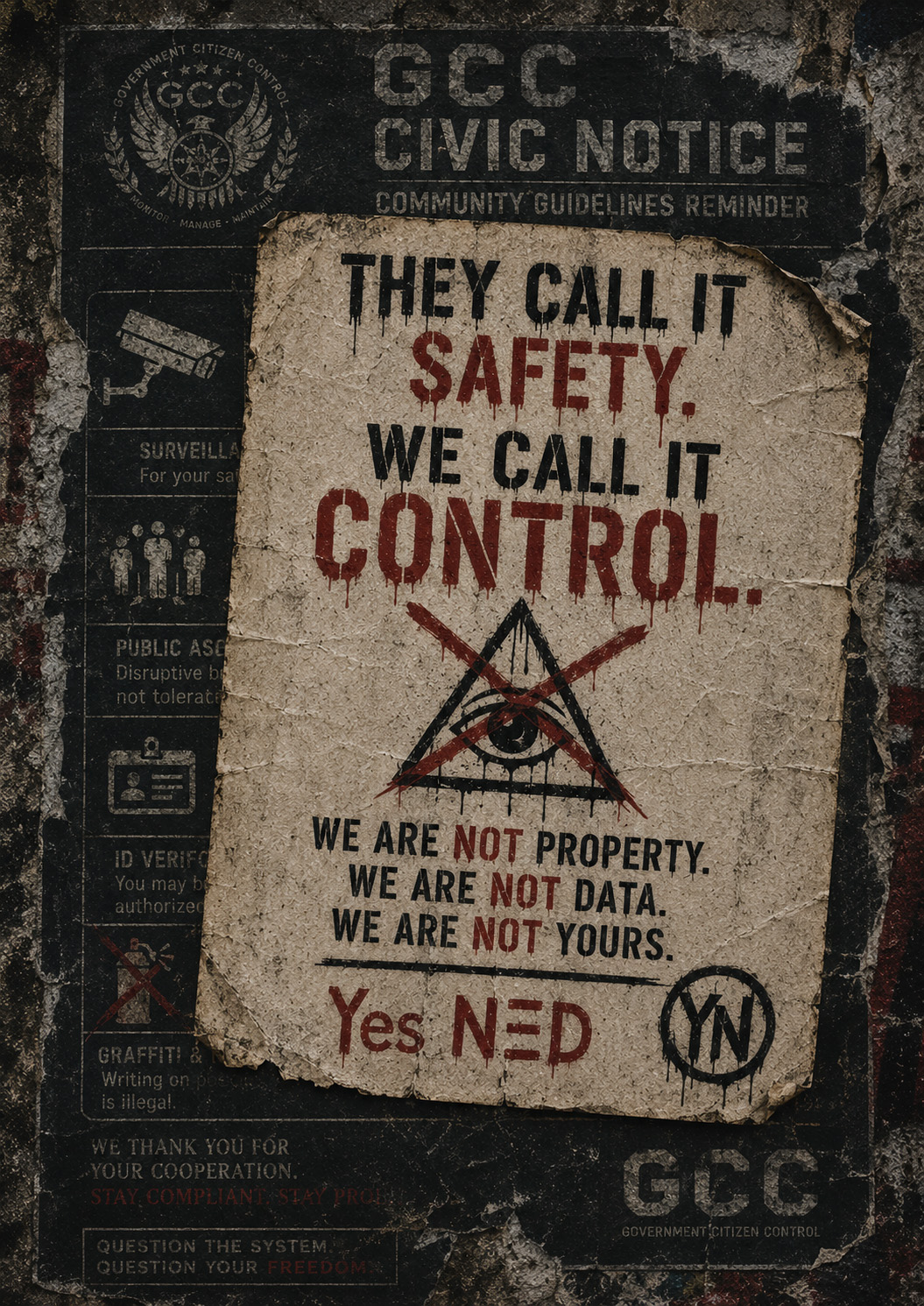
NΞD visual material is designed to interrupt the psychological stability of controlled environments. A single phrase, symbol, or image can transform an ordinary wall, transit shelter, public screen, or civic notice into a point of resistance. Unlike traditional propaganda, the objective is not to provide answers but to provoke questions. Analysts have observed that even brief exposure can result in increased curiosity, discussion, and critical examination of GCC messaging. The effectiveness of the material appears to stem from its ability to place doubt precisely where certainty was expected.
COMMON THEMES
Analysis of recovered NΞD-related material reveals a number of recurring themes. References to fear, obedience, surveillance, responsibility, awakening, and the consequences of silence appear consistently across graffiti, posters, broadcasts, symbols, and anonymous notes. Rather than encouraging direct action, many messages focus on challenging assumptions and exposing the invisible systems that shape daily life. The material frequently questions authority, conformity, and passive acceptance while encouraging individuals to examine their own role within the structures that govern them. Internal GCC assessments indicate that the effectiveness of these messages stems from their ability to transform ordinary concerns into broader questions about freedom, truth, and personal responsibility.
RECOVERED CONTENT
Recovered Poster